.png)
By Tim Warren, Director of AI - Web & AI Developer and Strategist
TL;DR
CES 2026 felt like a pivot from “AI everywhere” to “AI that ships.” The biggest signal wasn’t bigger models — it was cheaper, more portable computing, and products that can reason and explain decisions.
Key takeaways
- Inference got dramatically cheaper — and that will change what teams can afford to build.
- Edge AI (on-device inference) is back in the conversation, which shifts privacy, latency, and data-strategy decisions.
- Robotics is still messy, but the industry is staffing like it expects real deployments.
- Autonomy is trending toward “explainable” behavior (what the system sees, plans, and why).
- OpenAI’s health push is real — and it’s already raising trust, safety, and regulation questions.
The chip wars got serious — and edge AI is the real story
NVIDIA used CES to frame a new baseline for AI economics: the Rubin platform claims up to a 10× reduction in inference token cost versus the prior generation. [1] That kind of cost drop doesn’t just help hyperscalers. It widens the set of teams who can justify production-grade AI — mid-market companies, internal tooling, and “we can’t afford this yet” roadmaps. [1]
Who showed up alongside Rubin
The more interesting part: multiple vendors used CES to push AI compute closer to the device. Intel highlighted Core Ultra Series 3 systems built on Intel 18A, positioning NPUs as a first-class part of the AI PC story. [3] Qualcomm introduced Snapdragon X2 Plus for Windows laptops and creator workflows, continuing the “AI on your machine” push. [4] AMD leaned into running larger models locally — including systems configured with very high unified memory for big local LLMs. [5,6]
What’s changing is where inference happens.
The real shift is edge AI (on-device inference): AI is moving off your servers and onto endpoints — PCs, vehicles, robots, and sensors — when it makes sense for latency, privacy, and cost.
If you’re planning an AI roadmap for 2026, pressure-test every use case with three questions:
- Can this run locally (or partially locally) without degrading the experience?
- What data should never leave the device — and how will we explain that clearly to users?
- What becomes possible if inference is 5–10× cheaper?
Robots went from “wow, cool” to “we’re hiring for this”
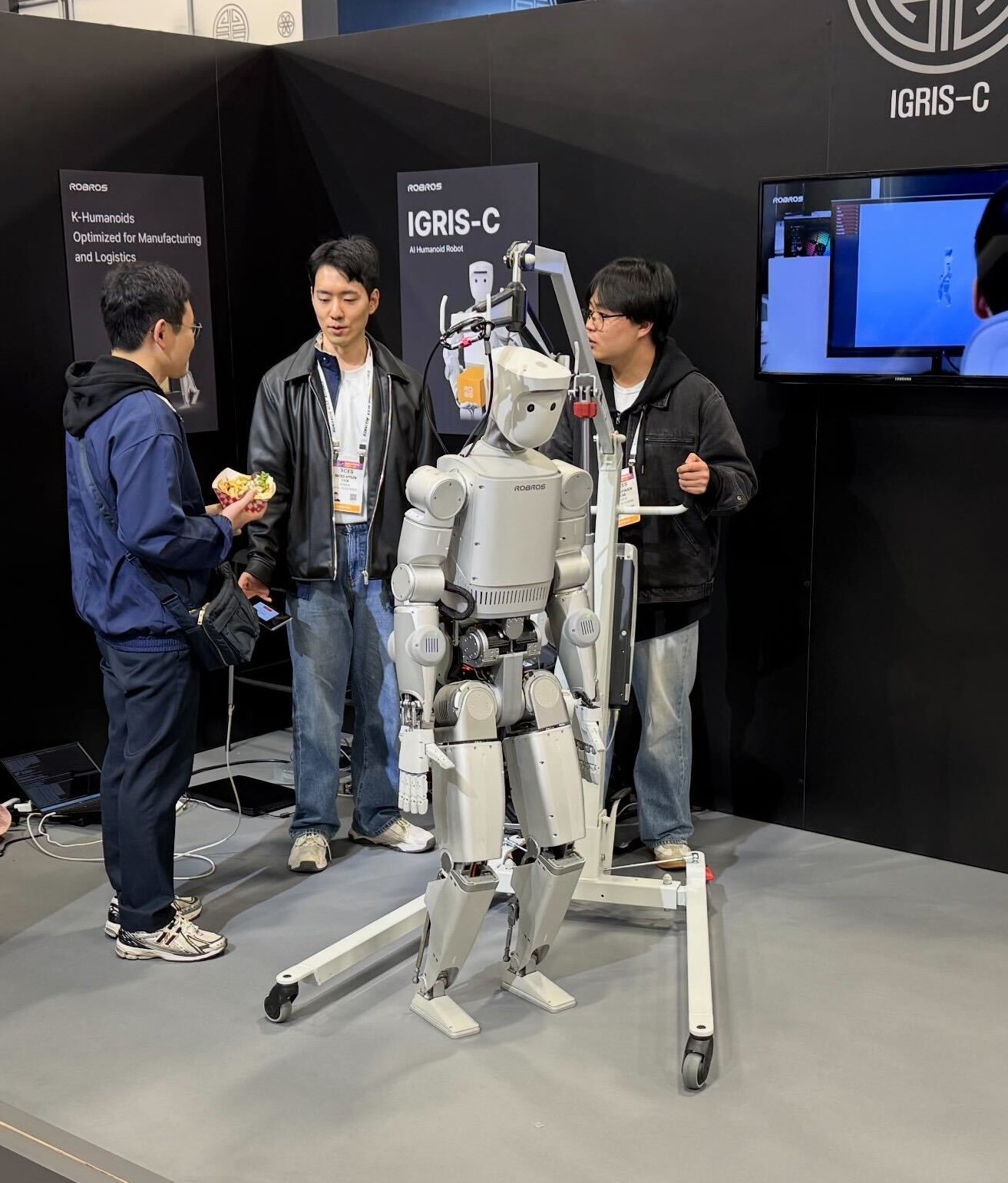
Robots were still chaotic on the show floor — some impressive, some pure demo theater. But the signal changed: teams are staffing like they expect deployments, not just prototypes.
Industrial robots are being productized
Boston Dynamics’ Atlas updates — plus its partnership with Google DeepMind — were framed around real industrial work, not stunts. [7,8]
Home robots are getting attention, but they’re early
LG’s CLOiD demoed a “zero labor home” vision. The capability is real, but speed, reliability, and price will determine whether it becomes a product or a perpetual demo. [9,10]
.jpg)
Self-driving started making sense — because it began explaining itself
Autonomy felt less like “the car drives itself” and more like “the system can show what it sees, what it plans to do next, and why.” That’s the direction regulators and buyers are pushing the industry.
Reasoning tools are showing up for AV stacks
NVIDIA’s Alpamayo package is explicitly aimed at reasoning-based autonomous driving — models, tools, and datasets designed to handle long-tail scenarios and produce clearer decision traces. [11,12]
Robotaxi partnerships are accelerating testing
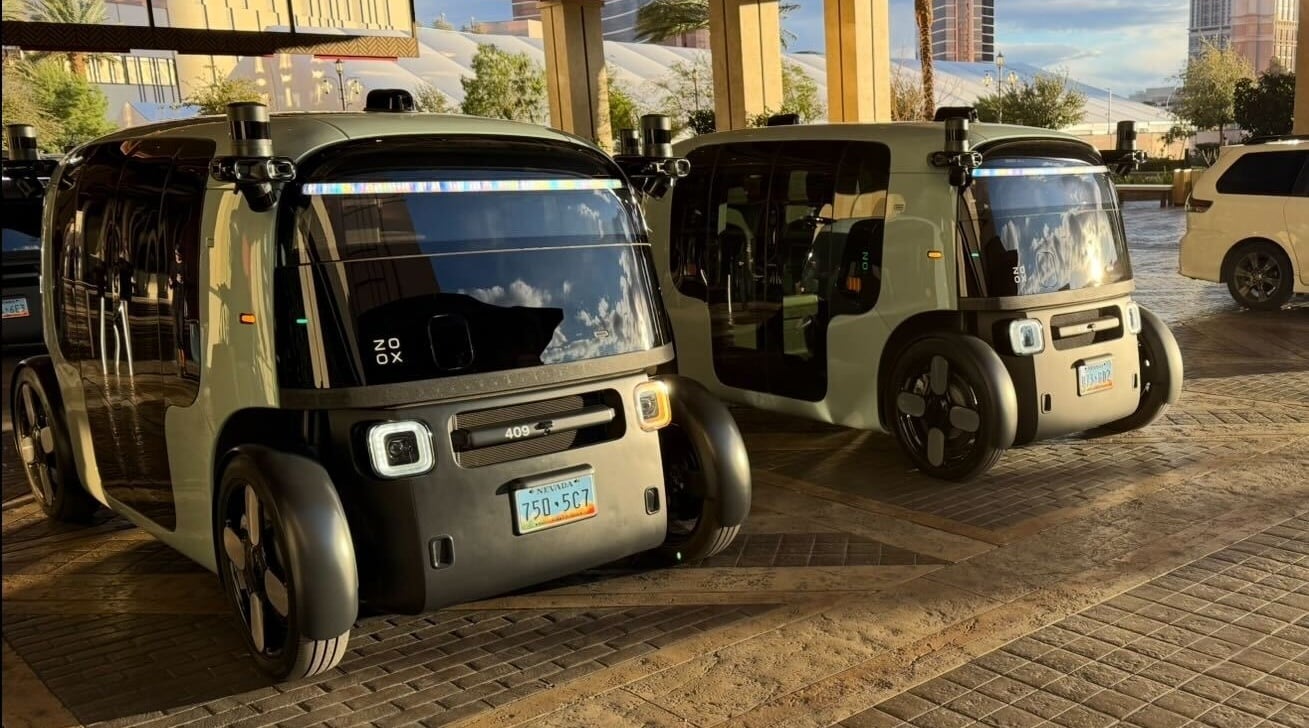
Lucid, Nuro, and Uber announced a robotaxi program with on-road testing already underway, ahead of a broader rollout later this year. [13,14]
The important shift is less “magic autonomy” and more transparency: systems that can communicate intent and uncertainty win trust faster.
OpenAI made an explicit move into health
OpenAI introduced ChatGPT Health as a dedicated experience aimed at helping people navigate health and wellness more confidently. [15] That move is already prompting sharp questions about safety, regulation, and what users should (and shouldn’t) rely on an AI system for. [16]
AI got boring — which is actually good
The most important AI trend at CES 2026 wasn’t “more AI.” It was useful AI — features that save time, reduce friction, and remove small annoyances.
Two examples that stood out:
- Google is rolling deeper Gemini features into Gmail to help summarize and act on email threads. [17]
- Ford announced an AI assistant experience that threads through the Ford / Lincoln apps to help owners understand vehicle capabilities. [18]
Boring is the win condition: if it’s reliable, low-friction, and repeatable, it spreads.
What this means for your marketing
How does edge AI change your privacy strategy?
Assume more inference will happen locally. That gives you a privacy advantage — if you’re explicit about it. Update your messaging from “we’re AI-powered” to “here’s where your data lives, what stays on-device, and why.”
Where does your brand show up when robots and vehicles become channels?
Treat robots and vehicles like emerging “surfaces.” The experience isn’t a webpage — it’s voice, UI overlays, and context-aware prompts. Start mapping the moments when a system might recommend, default, or route users to options.
Why are reasoning systems changing messaging?
Because users will demand an explanation. Build simple language for: what the system is optimizing for, what it can’t know, and how to override it. “Explainability” becomes a product feature you market.
What should you take from “boring AI wins”?
Stop chasing novelty. Invest in workflows that reduce time-to-value (setup, onboarding, success moments). If users feel helpfulness in week one, they keep it.
How did the infrastructure race reset?
Costs are dropping and hardware is diversifying — cloud, edge, and hybrid. That makes it easier to pilot multiple approaches. Your job is to translate infrastructure changes into customer-facing benefits (speed, privacy, reliability).
What does “AI-aware” actually mean?
It means your content is ready to be summarized, cited, and questioned by LLMs. Use clear headings, define terms once, and attach sources to claims so systems can quote you accurately.
A simple 90-day checklist
- Pick 2–3 user journeys where latency or privacy matters and test an on-device / hybrid approach.
- Add sources to your highest-traffic “AI claims” pages (benchmarks, announcements, third-party coverage).
- Rewrite your AI positioning to include a one-paragraph “how it works” explanation and an “override” story.
- Audit your heading hierarchy (one H1, logical H2/H3s) and add an FAQ section where it helps.
- Publish or update author bios for content that will be used as a reference.
FAQs
What was the biggest theme at CES 2026?
AI stopped being a show-floor label and started looking like a deployment story: cheaper inference, edge compute, robots with real budgets, and autonomy that explains itself.
What is edge AI, and why does it matter?
Edge AI is on-device inference — running models on endpoints like PCs, vehicles, and robots. It matters because it can reduce latency, improve privacy, and cut cloud costs.
Are robots actually ready for everyday home use?
Some narrow tasks are getting there, but speed, reliability, and cost are still the bottlenecks. Industrial deployments are moving faster than consumer home robots.
Is self-driving getting closer to mainstream adoption?
Yes, but the next leap is less about autonomy demos and more about systems proving safety and explaining decisions clearly — especially for regulators.
What did OpenAI announce related to health?
ChatGPT Health: a dedicated experience focused on health and wellness information, now drawing scrutiny around safety, regulation, and trust.
What should marketers take away from CES 2026?
Expect more AI to be embedded in devices and channels. Market explainability and privacy, and write content that LLMs can cite.
How should teams plan for dropping AI infrastructure costs?
Budget for more experiments. When inference becomes cheaper, the winning teams are the ones who rapidly test, measure, and scale what works.
What should a company do in the next 90 days after CES 2026?
Run a small pilot that benefits from edge or hybrid compute, tighten your source attribution, and publish an FAQ + structured data for key pages.
References
- [1] NVIDIA press release: Rubin platform
- [2] NVIDIA developer blog: Inside the Rubin platform
- [3] Intel press release: Core Ultra Series 3 on Intel 18A (CES 2026)
- [4] Qualcomm press release: Snapdragon X2 Plus (CES 2026)
- [5] AMD press release: AI leadership announcements at CES 2026
- [6] AMD blog: Ryzen AI Max+ and unified memory context
- [7] Boston Dynamics blog: Atlas update (CES 2026) and DeepMind partnership
- [8] Boston Dynamics blog: Google DeepMind partnership details
- [9] LG newsroom: CLOiD home robot at CES 2026
- [10] The Verge: CLOiD demo coverage
- [11] NVIDIA press release: Alpamayo autonomous vehicle development
- [12] NVIDIA developer blog: Building AVs that reason with Alpamayo
- [13] Uber investor relations: Lucid, Nuro, and Uber robotaxi announcement
- [14] Reuters: Lucid, Nuro, Uber debut robotaxi at CES 2026
- [15] OpenAI: Introducing ChatGPT Health
- [16] The Guardian: concerns about ChatGPT Health launch in Australia
- [17] Google: Gmail is entering the Gemini era
- [18] Ford: Meet the AI Assistant feature capabilities